
What yoga therapy actually is
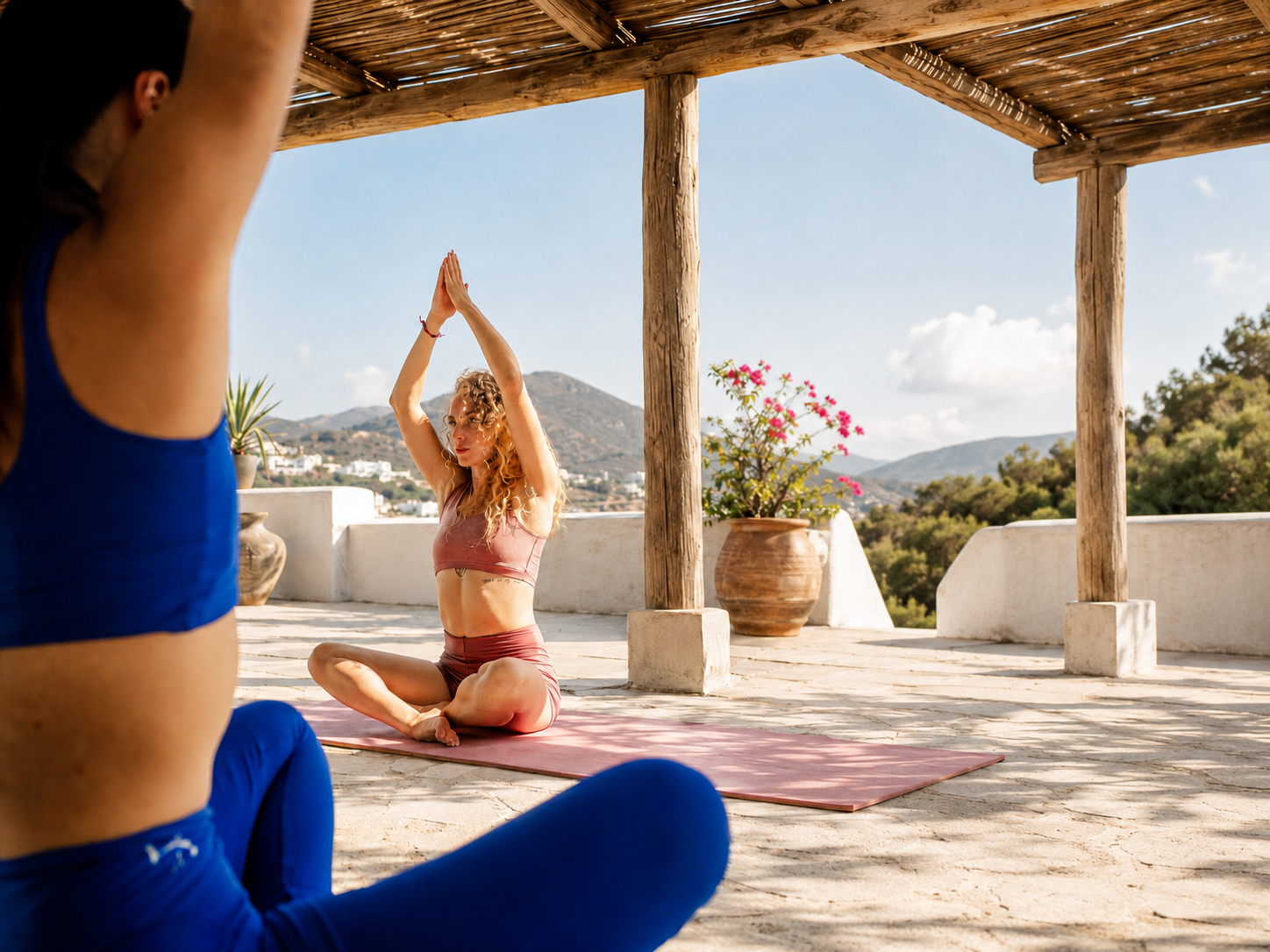
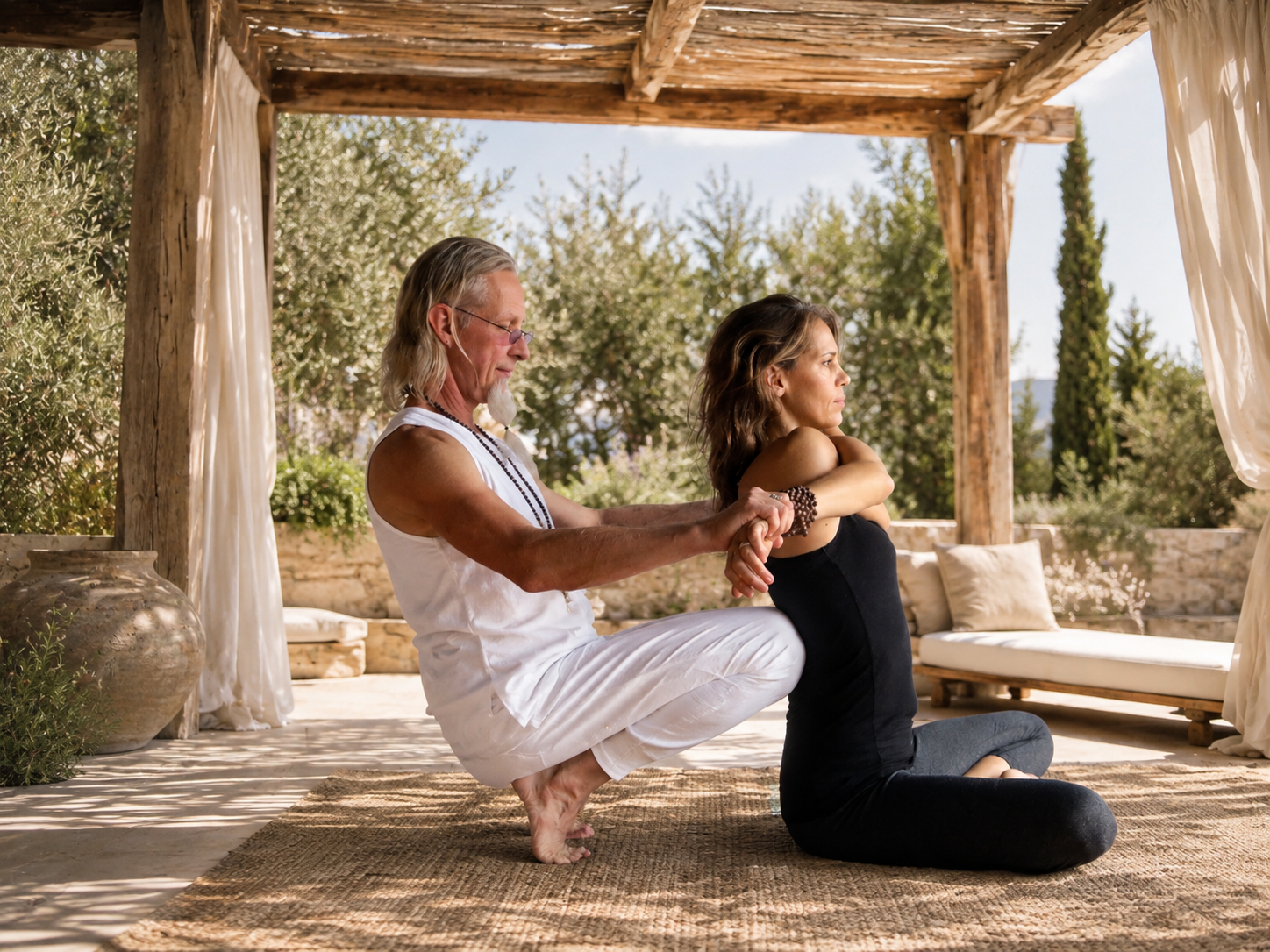
Yoga therapy is not a yoga class with modifications. It is an assessment-led, one-to-one practice in which the tools of yoga — posture, breath, relaxation and attention — are applied to a specific condition or goal rather than to a general sequence. The ninety minutes exist because assessment takes time.
A session opens with a detailed intake: what is happening, how long it has been happening, what makes it better or worse, your medical history, medication, sleep and stress. Your therapist then observes how you stand, breathe and move. Only after that does practice begin, and the practice may be very small — three or four movements, a breathing ratio, a position for rest — chosen because they address what was found. You leave with a short home practice, which is the part that does the work.
A short history of the practice
The therapeutic use of yoga is not a modern invention, but its clinical form is. Tirumalai Krishnamacharya, teaching in Mysore from the 1930s, worked individually with students and adapted practice to the person in front of him, an approach he passed to his son T. K. V. Desikachar, who developed it into Viniyoga: yoga adapted to the individual rather than the individual adapted to yoga.
In parallel, Swami Kuvalayananda founded the Kaivalyadhama institute in 1924 to study yoga's physiological effects scientifically, one of the first attempts to put the practice on a research footing.
The profession itself is recent. The International Association of Yoga Therapists was founded in 1989, and accredited training standards and the C-IAYT credential only appeared in the 2010s, alongside a growing body of research into yoga for lower back pain, anxiety and cardiovascular health.
Where it is most widely practised
India has the deepest institutional base, with dedicated yoga therapy hospitals and research centres in Bengaluru and Lonavla. The United States has the largest professional body and the clearest credentialing pathway, and yoga therapy appears in integrative medicine programmes at several major hospital systems there.
The United Kingdom, Australia, Germany and the Netherlands all have established training routes, and Australia in particular has integrated it with physiotherapy. In Spain and the Balearics it remains a specialist offering rather than a common one, and genuinely credentialed yoga therapists are far rarer here than yoga teachers, which is why we verify the specific qualification.
Who this work is for
People with persistent physical problems form the largest group: lower back and neck pain, sciatic symptoms, shoulder restriction, hip issues, and post-surgical or post-injury recovery once cleared by a clinician. It suits problems that have not resolved with generic exercise.
It is equally used for what sits underneath: anxiety, insomnia, burnout, breathing patterns that have become shallow and upper-chest driven, and the physical residue of a long period of stress. Guests with long-term conditions — arthritis, hypertension, respiratory conditions, long-covid fatigue — use it as adjunctive support alongside their medical care.
It also suits people who have tried yoga and found it aggravating. If classes have consistently left your neck or knees worse, an assessment is more useful than another class.
Who should speak to us first
Tell us about all diagnoses, surgeries and medication, and about anything your clinician has specifically advised against. Yoga therapy is complementary and supportive; it is not a replacement for medical treatment, and it does not diagnose. We will not ask you to change medication, and any practitioner who suggests otherwise should be disregarded.
Where a problem needs assessment or hands-on treatment first, we will say so and may recommend Osteopathy. Where you simply want a good class rather than a clinical session, Private Yoga is better value.
Yoga Therapy in Ibiza with The Luxurist
Ninety minutes, from €250, at your villa or hotel anywhere in Ibiza or Formentera. Your therapist brings mats, blocks, straps, bolsters and blankets, and you leave with a written home practice tailored to what the session found. Every practitioner is credentialed, insured and vetted by us in person.
For the nervous-system side specifically, see Nervous System Reset or Breath Work.