
What deep tissue massage actually is
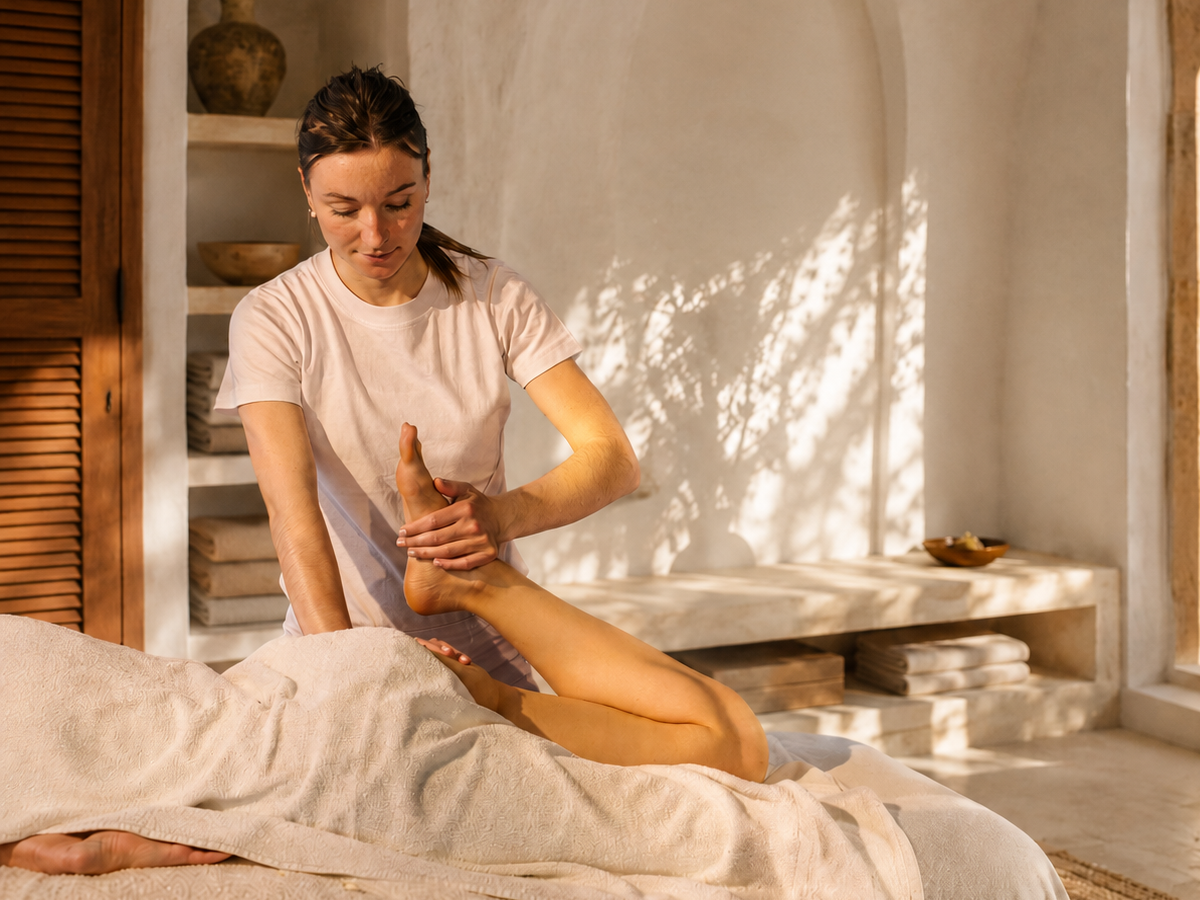
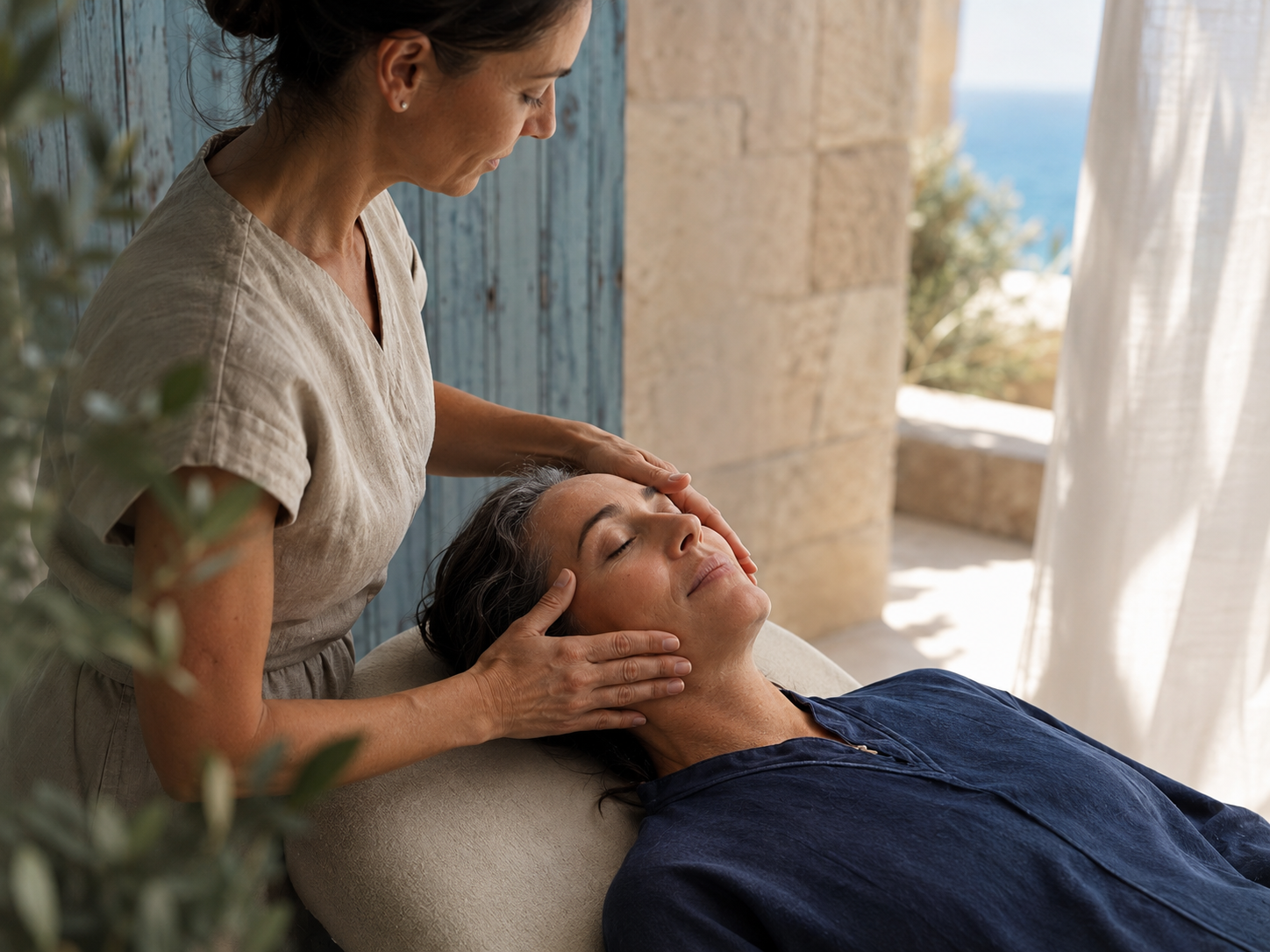
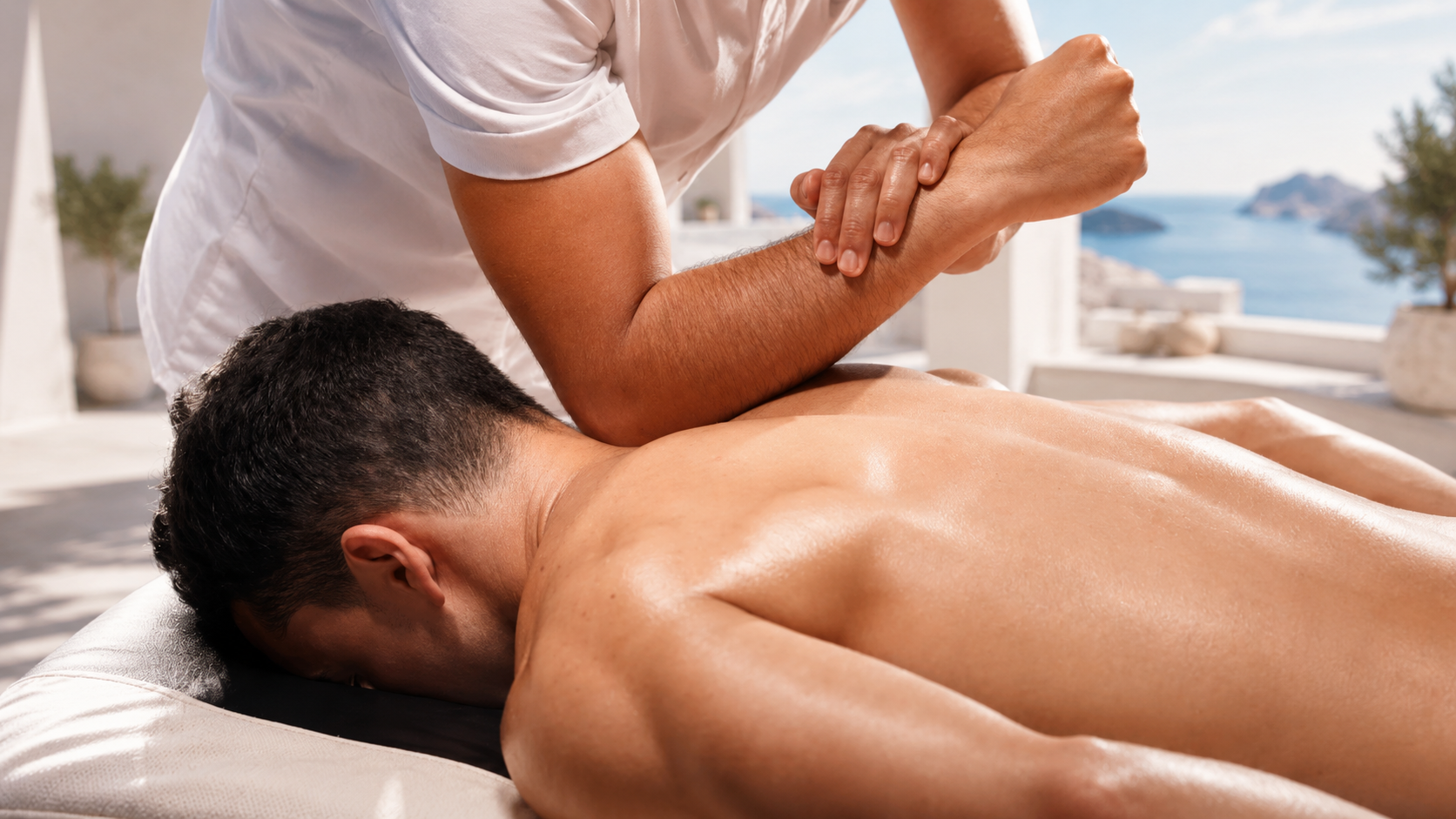
Deep tissue massage works slowly and deliberately into the lower layers of muscle and the fascia that wraps them. Rather than gliding over the surface, the therapist uses forearms, elbows, knuckles and braced fingers to sink through the superficial tissue and wait there, letting the body soften before pressure increases. Strokes are fewer, slower and far more specific than in a relaxation massage, and they usually follow the direction of the muscle fibres.
The aim is not pain. Good deep tissue work sits at the edge of what you can breathe through, which is where tissue actually releases; past that point the body braces and the session becomes counterproductive. Your therapist checks pressure throughout and works with your breath rather than against it.
A short history of the technique
Its foundations are European. Per Henrik Ling built a system of medical gymnastics and manual treatment in early nineteenth-century Sweden, and the Dutch physician Johan Georg Mezger later codified the classical strokes that still carry French names, giving massage a vocabulary that medicine could accept.
The deeper, more targeted branch grew through the twentieth century. The Canadian therapist Therese Pfrimmer developed a method of working across muscle fibres to restore circulation in tissue she considered bound down. In the United States, Ida Rolf's Structural Integration turned attention to fascia as a continuous, shapeable network, while Janet Travell's clinical mapping of trigger points, later popularised by Bonnie Prudden, gave therapists a reason to work one precise spot rather than a whole limb.
Sports medicine did the rest. As professional teams built recovery around soft-tissue work through the 1970s and 1980s, deep tissue moved from specialist clinics onto standard treatment menus, and by the 1990s it had become the most requested therapeutic massage in the English-speaking world.
Where it is most widely practised
The United States remains the largest market, supported by state licensure and a strong clinical massage tradition, with Canada, the United Kingdom, Germany, the Netherlands and the Nordic countries close behind. It is standard within physiotherapy and sports rehabilitation across Australia and New Zealand, and it travels with elite sport everywhere.
In Spain and the Balearics it arrived largely through wellness tourism and hotel spas, and Ibiza now has an unusually high concentration of experienced therapists for an island of its size. Demand here is seasonal and specific: guests arriving stiff from long flights, crew and hospitality staff working punishing summer schedules, and athletes training through the quiet winter months.
Who this work is for
Deep tissue suits bodies carrying real load. Strength athletes, runners, cyclists, padel and tennis players book it for the hips, shoulders, calves and thoracic spine their sport quietly shortens. Sailors and crew come for necks and lower backs; golfers for rotational restriction.
It is equally chosen by people whose tension is occupational rather than athletic — desk years, long-haul travel, carrying children, standing shifts — and by anyone who has had massages before and found them pleasant but ineffective. If you have ever asked a therapist to press harder halfway through, this is the treatment you were looking for.
Guests also use it tactically on the island: on arrival to undo the journey, mid-stay to reset after several late nights, or the morning after a long hike or a full day on the water.
Who should speak to us first
Tell us in advance if any of the following apply: blood-thinning medication or a clotting disorder; a history of deep vein thrombosis; recent surgery, fracture or acute injury; osteoporosis; uncontrolled high blood pressure; active cancer treatment; skin infections, open wounds or extensive varicose veins; or if you are pregnant.
Most of these change the treatment rather than prevent it. Where deep pressure is not appropriate we will recommend a gentler alternative such as Relaxation Massage, Lymphatic Drainage or, in pregnancy, Pre-Natal Massage.
Deep Tissue Massage in Ibiza with The Luxurist
Sixty minutes, from €175, at your villa, hotel or yacht anywhere in Ibiza or Formentera. Your therapist arrives with a professional table, linens and oils, sets up in the room or outdoor space you prefer, and begins with a short conversation about pressure, problem areas and anything medical. Every practitioner is qualified, insured and vetted by us in person.
If your tension is training-related, Sports Massage may suit you better, and for structural work on long-standing patterns see Osteopathic Massage.