What manual lymphatic drainage actually is
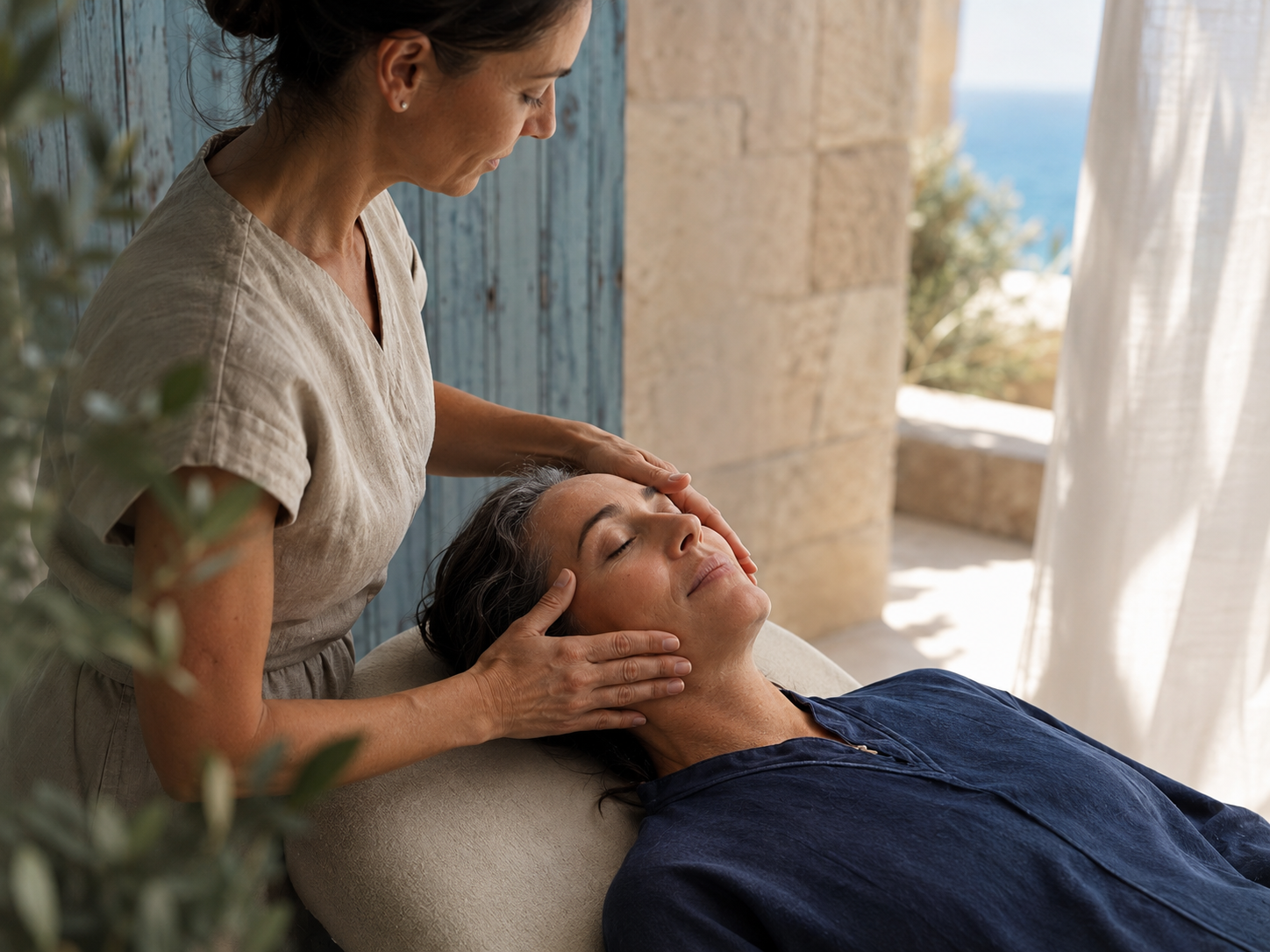
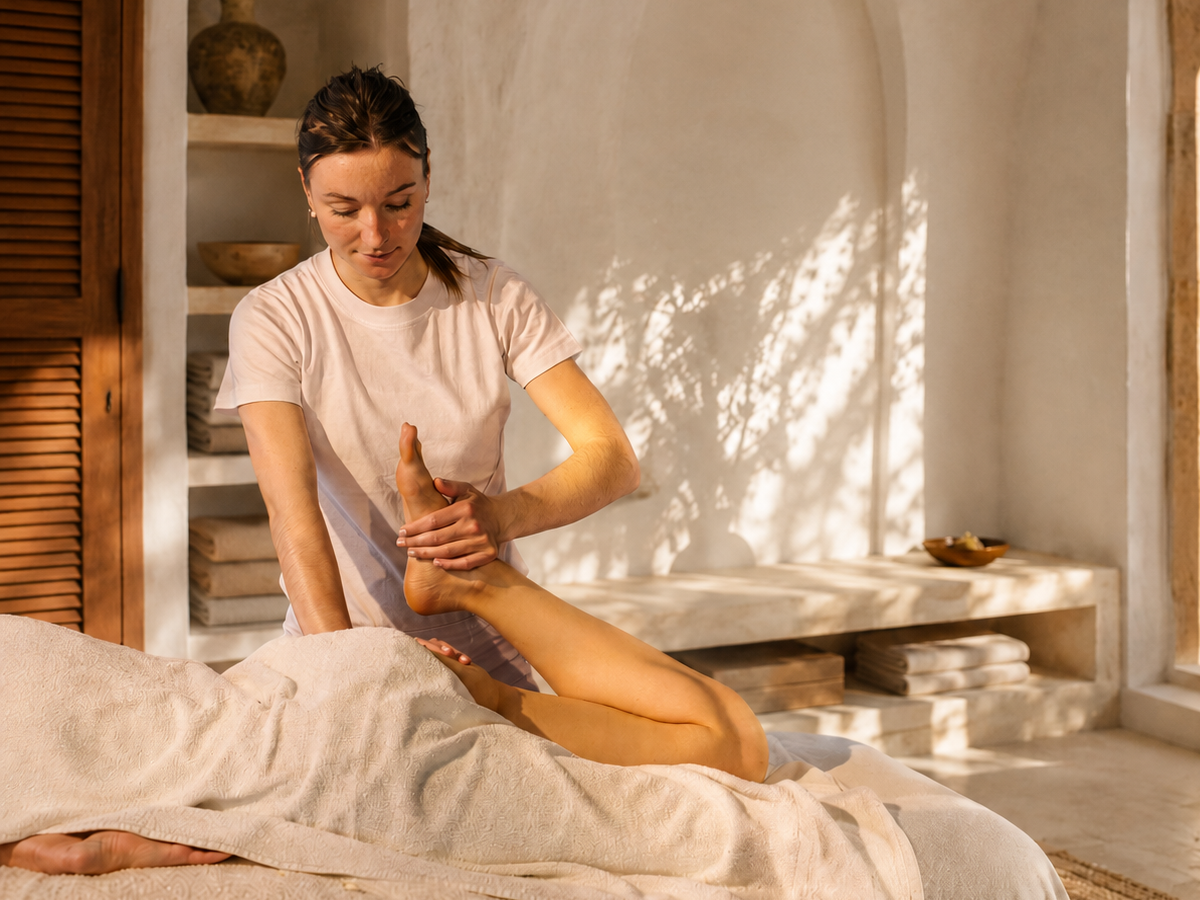
Manual lymphatic drainage is one of the lightest treatments in bodywork and one of the most technical. The lymphatic system sits just beneath the skin and has no pump of its own, so the therapist uses very gentle, rhythmic, repetitive strokes that stretch the skin rather than press into muscle, following the direction lymph naturally travels towards the nodes at the neck, armpits and groin.
Sequence is everything. The therapist clears the drainage points first so there is somewhere for fluid to go, then works from the trunk outwards towards the limbs. Pressure is roughly that of a hand resting on skin. If it feels like a firm massage, it is not lymphatic drainage.
A short history of the technique
The method was developed in 1932 by the Danish physician Emil Vodder and his wife Estrid, a naturopath, while working in Cannes with patients suffering from chronic swelling and congested lymph nodes. Working against the medical orthodoxy of the day, which discouraged touching lymph nodes, they built a sequence of light circular movements and presented it in Paris in 1936.
Institutional acceptance followed in Europe. Michael and Ethel Földi in Germany and Albert Leduc in Belgium developed the clinical schools that turned the technique into Complete Decongestive Therapy, the standard conservative management of lymphoedema, combining drainage with compression, skin care and exercise.
A second, aesthetic branch grew separately, most visibly in Brazil, where drainage became routine in recovery after cosmetic surgery. That is largely why the treatment is now familiar far outside clinical settings.
Where it is most widely practised
Germany and Austria remain the clinical heartland, where it is a prescribed and often insurance-funded treatment delivered by specifically certified therapists. Belgium, France, Switzerland and the Nordic countries follow the same medical model. Brazil leads the aesthetic and post-surgical field by a wide margin, and the United States, the United Kingdom and the Gulf states have large private markets.
In Spain and the Balearics it sits between the two worlds. On Ibiza most bookings are not clinical: guests arriving swollen after long flights, people managing heat-related fluid retention through July and August, those recovering from cosmetic procedures done elsewhere, and clients who simply feel lighter for it.
Who this work is for
It suits anyone whose complaint is fluid rather than muscle. Swollen ankles and fingers after flying, heaviness in the legs during hot weather, puffiness around the face and eyes, hormonal water retention and general bloating are the most common reasons guests book it.
It is also widely used in recovery: after cosmetic or orthopaedic surgery once a surgeon has given clearance, during long periods of sitting or immobility, and by athletes in the days after very heavy training. People living with diagnosed lymphoedema use it as part of ongoing management under medical supervision.
Because pressure is so light, it also suits guests who cannot tolerate conventional massage: those with fibromyalgia, chronic fatigue, sensitive skin or low pain threshold, and older clients.
Who should speak to us first
This is the treatment with the longest list of genuine contraindications, so please tell us in advance about any of the following: active infection, cellulitis or fever; deep vein thrombosis or a history of clots; congestive heart failure or fluid retention of cardiac origin; kidney failure; active or untreated cancer; recent surgery without surgical clearance; an overactive thyroid; or pregnancy.
Several of these are absolute rather than adaptable, because moving fluid faster is not always desirable. We would rather turn a booking down than proceed. If drainage is not appropriate, we may suggest Relaxation Massage, Reflexology Massage or, in pregnancy, Pre-Natal Massage.
Lymphatic Drainage in Ibiza with The Luxurist
Sixty minutes, from €175, at your villa, hotel or yacht anywhere in Ibiza or Formentera. Your therapist arrives with a professional table and linens, takes a short health history before beginning, and will explain why the sequence starts where it does. Every practitioner is qualified, insured and vetted by us in person.
For post-flight recovery more broadly, see the Ibiza Arrival Reset; for facial puffiness specifically, see Facial Massage.