
What sports massage actually is
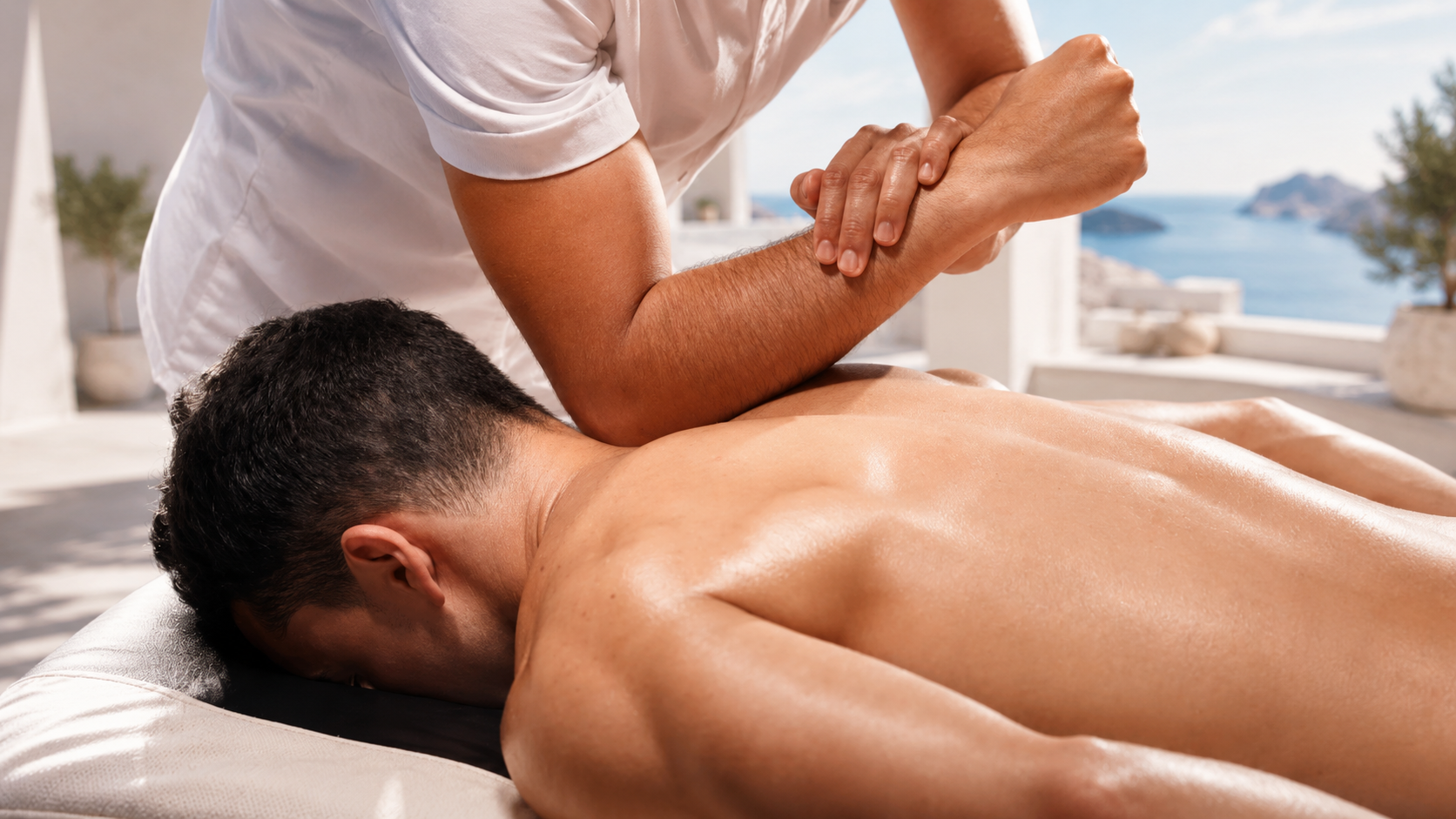
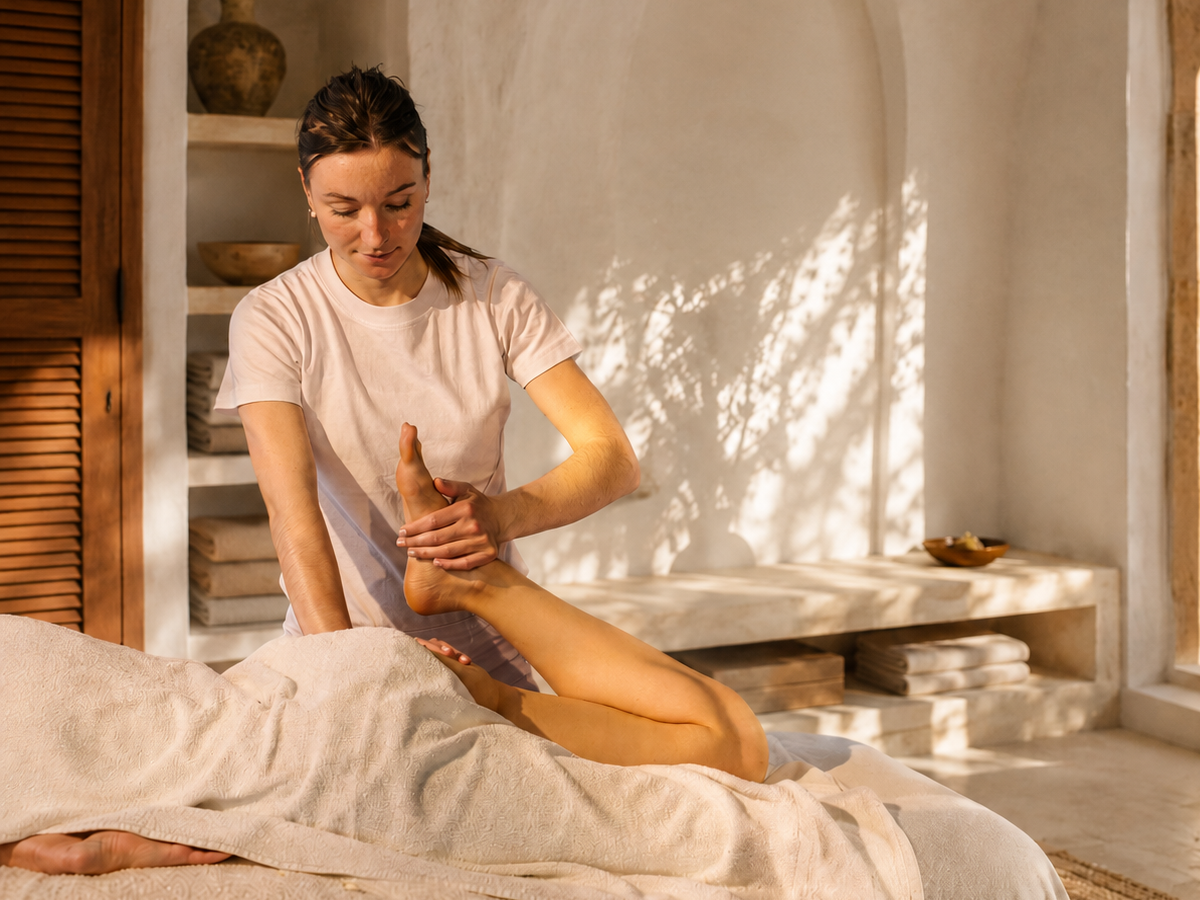
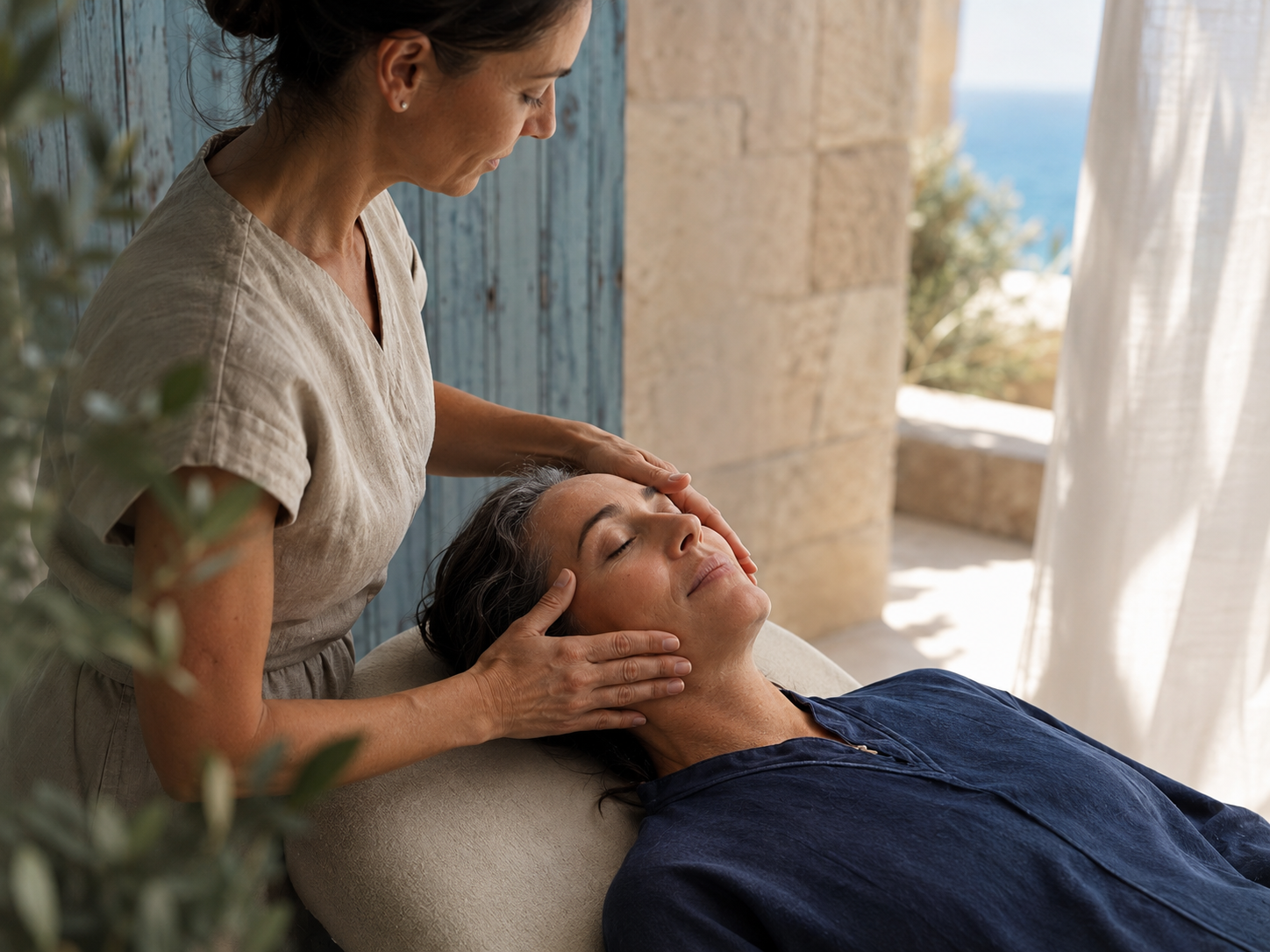
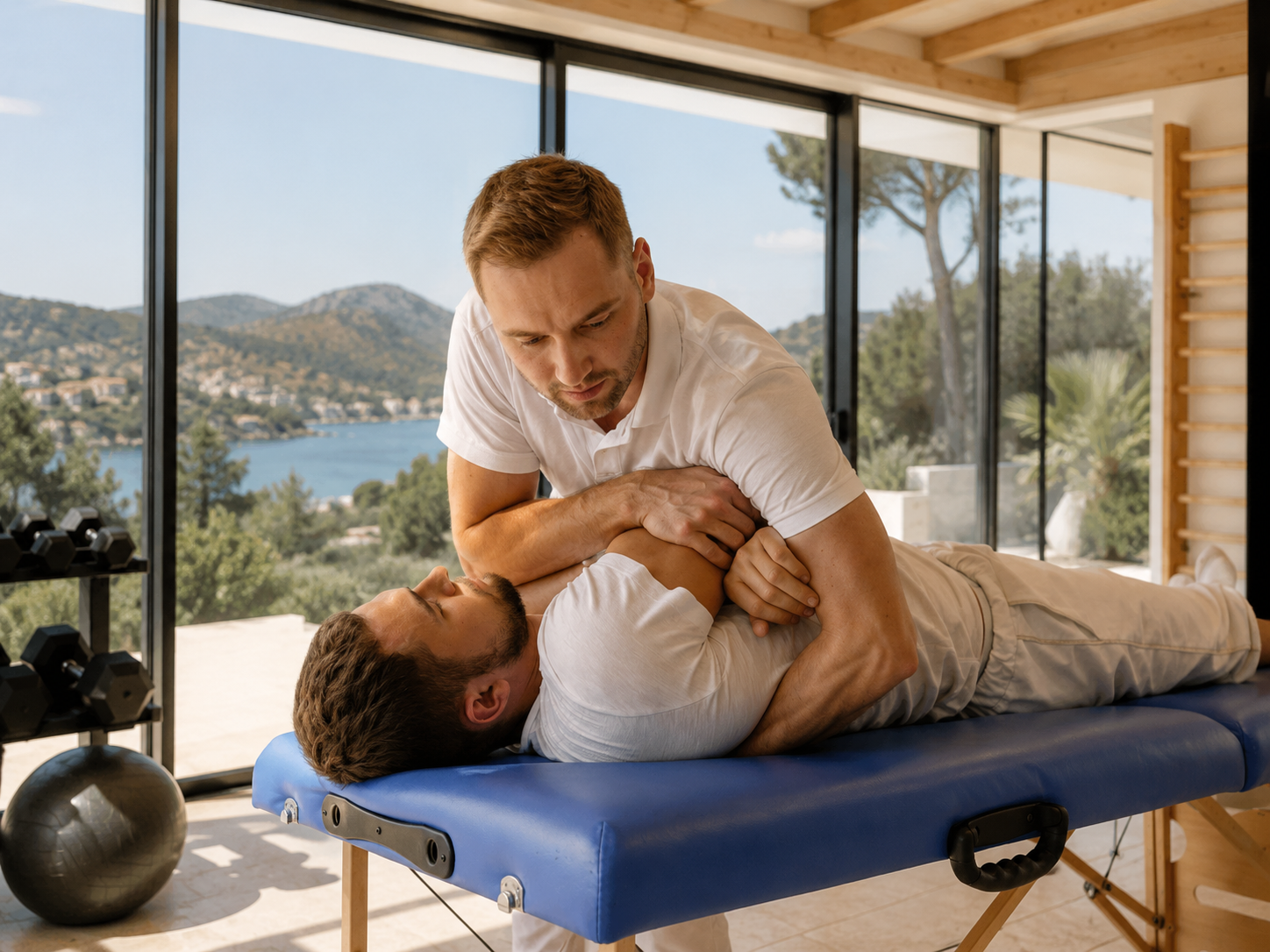
Sports massage is soft-tissue work organised around athletic demand rather than around relaxation. The therapist assesses which structures your sport loads, then combines compression, cross-fibre friction, muscle energy techniques and assisted stretching to restore length and function in those tissues specifically. The pace is brisker than deep tissue and the work is usually regional rather than whole-body.
Timing matters more here than in any other treatment. Pre-event work is short, stimulating and shallow, intended to raise tissue temperature without dulling the muscle. Post-event work is flushing and gentle, aimed at swelling and cramp. Maintenance work between sessions is where the real depth happens. Tell your therapist what you have done and what you are about to do, and the session is built accordingly.
A short history of the practice
Athletic rubbing is ancient — Greek and Roman gymnasia employed specialists to oil and knead competitors — but the modern discipline is a twentieth-century product of elite sport. The Finnish distance runners of the 1920s travelled with dedicated masseurs, and the Soviet and Eastern Bloc sports science programmes of the 1950s onwards built massage into periodised training as a recovery variable to be planned rather than a luxury.
Western sport followed. The 1972 and 1976 Olympic cycles brought soft-tissue therapists into national teams, the running boom of the late 1970s carried the practice to amateur athletes, and by the 1980s the first formal sports massage qualifications appeared in the United Kingdom and the United States.
Since then it has converged with physiotherapy and clinical rehabilitation, absorbing trigger point theory, muscle energy technique and fascial work, so that a good sports therapist today works much closer to a musculoskeletal clinician than to a spa practitioner.
Where it is most widely practised
It is strongest wherever professional sport is well funded: the United States, the United Kingdom, Germany, the Netherlands, Scandinavia and Australia all have mature qualification pathways and it is routine within football, cycling, athletics and rugby. Spain is a significant centre in its own right, largely through cycling and football, and Spanish sports therapists are widely trained.
In the Balearics, demand is driven by cycling and triathlon. Mallorca and Ibiza fill with training camps between February and May, and the island also has a steady population of padel and tennis players, open-water swimmers, sailors and hikers. Summer brings a different client: guests who train seriously at home and do not want a week off to undo three months of work.
Who this work is for
Cyclists on training camp are the most frequent bookers, typically for quadriceps, hip flexors, ITB and neck. Runners and triathletes come for calves, achilles and glutes. Padel, tennis and golf players come for shoulders, forearms and rotational restriction, and sailors and crew for lower backs.
It is not only for competitors. Anyone with a consistent training habit benefits from the same approach, and so do people whose work is physically repetitive. Guests preparing for a specific event — a long ride, a hike, a race, a regatta — use pre-event sessions, while those who have just completed one use post-event work the same evening or the following morning.
If you have a recurring niggle rather than an acute injury, this is usually the right treatment. Genuine injury needs diagnosis first.
Who should speak to us first
Tell us in advance about any acute injury within the last seventy-two hours, suspected muscle tears or fractures, joint instability, deep vein thrombosis or clotting disorders, blood-thinning medication, recent surgery, active infection or fever, or pregnancy.
Sports massage is not a substitute for diagnosis. If something is sharp, swollen, giving way or getting worse, see a physician or physiotherapist first. Where a session is not appropriate we will suggest Deep Tissue Massage, Lymphatic Drainage or mobility-led Personal Training instead.
Sports Massage in Ibiza with The Luxurist
Sixty minutes, from €175, at your villa, hotel or yacht anywhere in Ibiza or Formentera. Your therapist arrives with a professional table, linens and oils, takes a short history of your training and event schedule, and targets the session accordingly. Every practitioner is qualified, insured and vetted by us in person.
For ongoing mobility between sessions, see Animal Flow or Yoga Therapy.